Home › Parking Lot Paving & Installation
Build a professional first impression with asphalt parking lot paving and installation in Boston, MA. We design and pave new lots for offices, retail centers, and multifamily properties, with attention to drainage, slopes, and traffic flow. Our team delivers durable blacktop that stands up to traffic and New England weather.
Precision Asphalt Boston provides professional asphalt parking lot paving throughout Boston, MA, Massachusetts and the surrounding area. Our licensed, insured crew delivers safe, clean, on-time work with a free estimate before anything begins. Call (617) 648-5798 or request your free quote.
Asphalt Parking Lot Paving in Boston, MA Done Right
A good parking lot in Boston has to do more than look smooth on day one. It has to handle New England freeze-thaw cycles, heavy snow loads, salt, and daily traffic without breaking up. At Precision Asphalt Boston, our asphalt parking lot paving focuses on building a structure under the surface that can take that abuse year after year.
When we look at a new parking lot or a full replacement, we start with how the lot will be used. We ask about vehicle types, traffic flow, delivery truck routes, dumpster pads, and where snow gets piled in winter. A small retail lot in Jamaica Plain does not need the same pavement design as a busy loading area in South Boston. That information drives the pavement thickness, base design, and drainage layout we recommend.
Our crews are local, and we know the soil conditions around Boston. In neighborhoods built on fill near the waterfront, subgrade can be soft and hold water, so we often specify thicker gravel bases and more robust drainage. In older neighborhoods with stable native soils, we can sometimes save cost with a leaner base while still meeting long term performance goals. This local experience helps us avoid the premature cracking and rutting that happen when a one-size-fits-all design is used.
We also keep permitting and local standards in mind. Many Boston and Massachusetts projects must follow specific ADA, striping, and drainage requirements. Precision Asphalt Boston can coordinate with your engineer or provide guidance so your new asphalt parking lot paving project passes inspection and is ready to use on schedule.
Our Step-by-Step Parking Lot Installation Process
Good asphalt parking lot paving is really the result of a disciplined process. Skipping or rushing steps is what leads to puddles, soft spots, and early failure. At Precision Asphalt Boston, we walk property owners through each stage so there are no surprises.
The first step is layout and excavation. We mark the parking area, drive lanes, islands, and accessible routes, then strip existing pavement or topsoil and excavate to the design depth. In Boston, this often means working around buried utilities and tight property lines. We coordinate utility mark outs before digging and use equipment sized to fit tight urban sites when needed.
Next we prepare the subgrade. We compact the exposed soil and address any soft or pumping areas. If we find unsuitable material, such as organic fill or saturated clay, we remove it and replace it with compactable aggregate. In low lying or coastal parts of the city where groundwater can be high, we may recommend underdrains or additional stone depth to keep the pavement structure dry.
Then we install the base course, usually a dense graded crushed stone. This is placed in lifts and compacted to achieve a firm, unyielding layer. We set precise slopes toward catch basins or swales, typically 1.5 to 2 percent, so water runs off and does not pond. Before paving, we proof roll the base with a loaded truck or roller to reveal any weak spots that need correction.
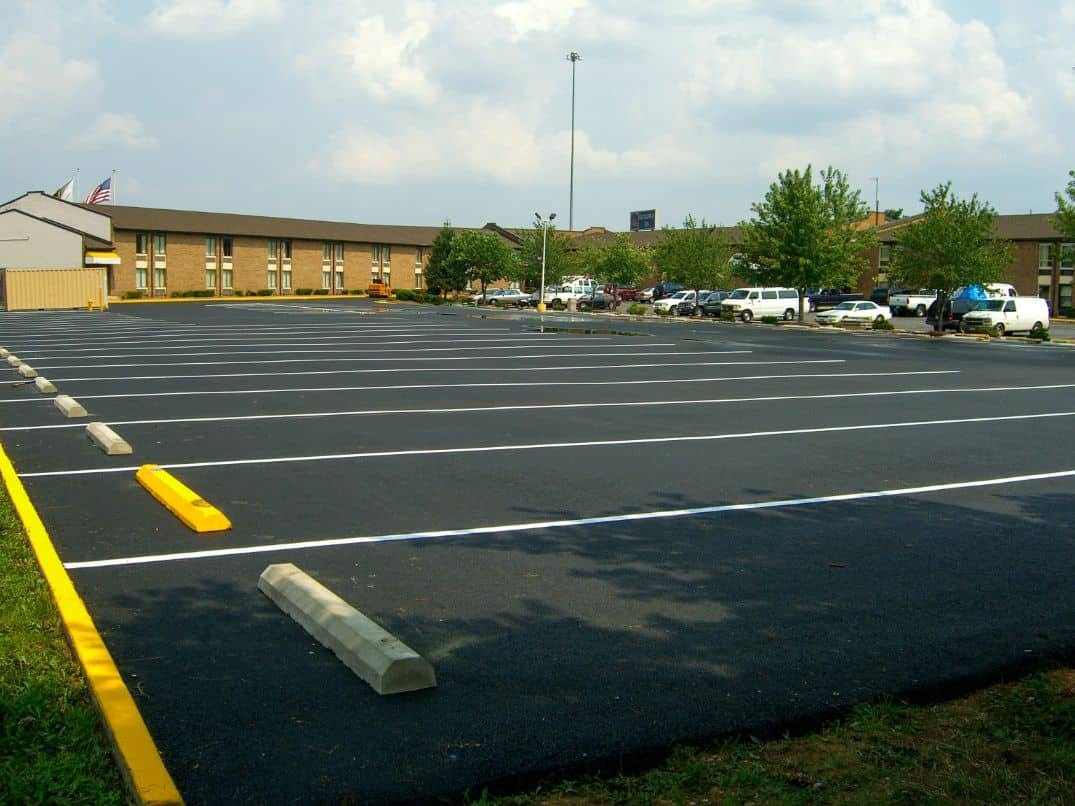
Asphalt paving comes next. For most commercial parking lots we install a binder course, which is a stronger, coarser mix, followed by a finer surface course that provides a smooth, tight finish. Both layers are placed with a paver for consistent thickness, then compacted with steel and rubber tire rollers. Joints are carefully matched and sealed so water cannot penetrate. After sufficient cooling time, we return to apply pavement markings, signage, and wheel stops so the lot is ready for traffic.
Material Options, Design Choices, and What Affects Cost
Not every Boston parking lot needs the same pavement structure, and we do not push one standard package. Precision Asphalt Boston explains the tradeoffs so you can match your budget with the performance you need.
A key decision is total pavement and base thickness. Light duty parking for cars only can often be built with 2 to 2.5 inches of asphalt over 6 to 8 inches of base. If your lot regularly sees delivery trucks, garbage trucks, or fuel tankers, we may specify 3 to 4 inches of asphalt over 8 to 12 inches of base, with thicker pavement or concrete pads in turning or loading areas. The thicker sections cost more upfront but dramatically reduce rutting and alligator cracking over time.
Mix selection is another cost and performance factor. Massachusetts has standard asphalt mix designs, but we can adjust lift thickness and specify different surface mixes for better skid resistance or tighter finish. In shaded areas that stay icy, we lean toward mixes that hold up well to sanding and salting. Near high visibility storefronts, we prioritize a cleaner, finer finish that paints and line striping adhere to well.
Site specific issues also affect price. Poor access, limited staging areas in dense neighborhoods, night or weekend work requirements, and complex phasing so businesses can stay open can all impact labor and equipment costs. Existing conditions matter too. If a Boston lot has deep structural failures or long term drainage issues, rebuilding the base takes more time and material than a straightforward mill and overlay.
We provide itemized proposals that show the main cost drivers: excavation depth, base thickness, asphalt tonnage, drainage improvements, curbing, and striping. That way you can see where money is going and where there may be options to scale back or phase work over multiple seasons without compromising the structure.
Common Parking Lot Problems in Boston and How We Prevent Them
Boston’s climate and dense urban environment create predictable problems for asphalt parking lots. At Precision Asphalt Boston we design and install with those specific issues in mind, so you are not paying to fix the same failures every few years.
Freeze-thaw cracking is one of the biggest concerns. Water gets into small surface openings, freezes, and expands, which widens cracks. To limit this, we focus on tight compaction, good joint construction, and proper slopes for drainage. We also recommend a maintenance schedule that includes crack sealing before winter, which is far cheaper than patching large failed areas.
Ponding water is another common complaint. Small depressions might seem minor at first, but standing water softens asphalt, worsens cracking, and turns into ice patches in winter. We counter this by laser checking grades during base and paving work, and by using straightedges and experienced rakers to fine tune slopes at catch basins and transitions. If an existing site has limited drainage options, we may suggest adding new basins or trench drains instead of simply following old problem grades.
Heavy truck traffic in tight spaces, such as behind restaurants or in alleyway access to urban loading docks, causes ruts and shoving in standard parking lot sections. For those areas we often thicken the pavement, adjust the asphalt mix, or install concrete pads in front of dumpsters and loading doors. Treating these as separate design zones inside the same project prevents localized failure from spreading across the lot.
Salt and snow removal practices also matter. We discuss with property managers where plows typically stack snow, because those piles soak the pavement and extend freeze-thaw cycles. In snow storage zones we often beef up the section or improve drainage to handle the extra load and moisture. We also slope sensitive areas away from building entrances and walkways to reduce icy conditions and slip hazards.
What Boston Property Owners Should Know Before Hiring a Paving Contractor
Before you commit to an asphalt parking lot paving project, it pays to know what to ask and what to look out for. Precision Asphalt Boston encourages property owners and managers to compare more than just the bottom line number on a proposal.
First, insist on a written pavement design: base depth, asphalt thickness by layer, and drainage plan. A quote that only says “new parking lot” without details makes it hard to compare bids and easy for corners to be cut later. Ask how the proposed section was chosen based on your actual use, such as car traffic only or frequent trucks.
Second, ask how subgrade and base problems will be handled. No contractor can see every condition before excavation, especially in older Boston properties, but a professional should explain what happens if unsuitable soils are found and how any extra work will be priced. This avoids disputes once the ground is open.
Third, confirm that the company is familiar with Boston and Massachusetts accessibility and striping requirements. Accessible parking layout, slope limits for accessible spaces and routes, and signage placement are not optional. Fixing these after the fact is far more expensive than doing them correctly during installation.
Finally, check scheduling and access planning. A well run project includes a phasing plan that keeps at least part of your lot usable when possible, clear communication about closures, and coordination with other trades if you are renovating or building new. We provide a simple schedule, discuss work hours allowed in your neighborhood, and coordinate with your tenants or business hours so the project is disruptive for as short a time as possible.
By asking these questions and understanding the basics of how asphalt parking lot paving should be designed and installed, you can choose a contractor that will deliver a parking lot built for Boston conditions, not just a quick surface fix.