Home › Walkway and Pathway Paving
Create safe, smooth access with asphalt walkway and pathway paving in Boston, MA. We install and replace asphalt paths that connect driveways, entries, gardens, and shared areas. Our team grades for drainage and builds walkways that resist cracking and heaving.
Precision Asphalt Boston provides professional asphalt walkway paving throughout Boston, MA, Massachusetts and the surrounding area. Our licensed, insured crew delivers safe, clean, on-time work with a free estimate before anything begins. Call (617) 648-5798 or request your free quote.
Asphalt Walkway Paving in Boston, Built for Real Foot Traffic
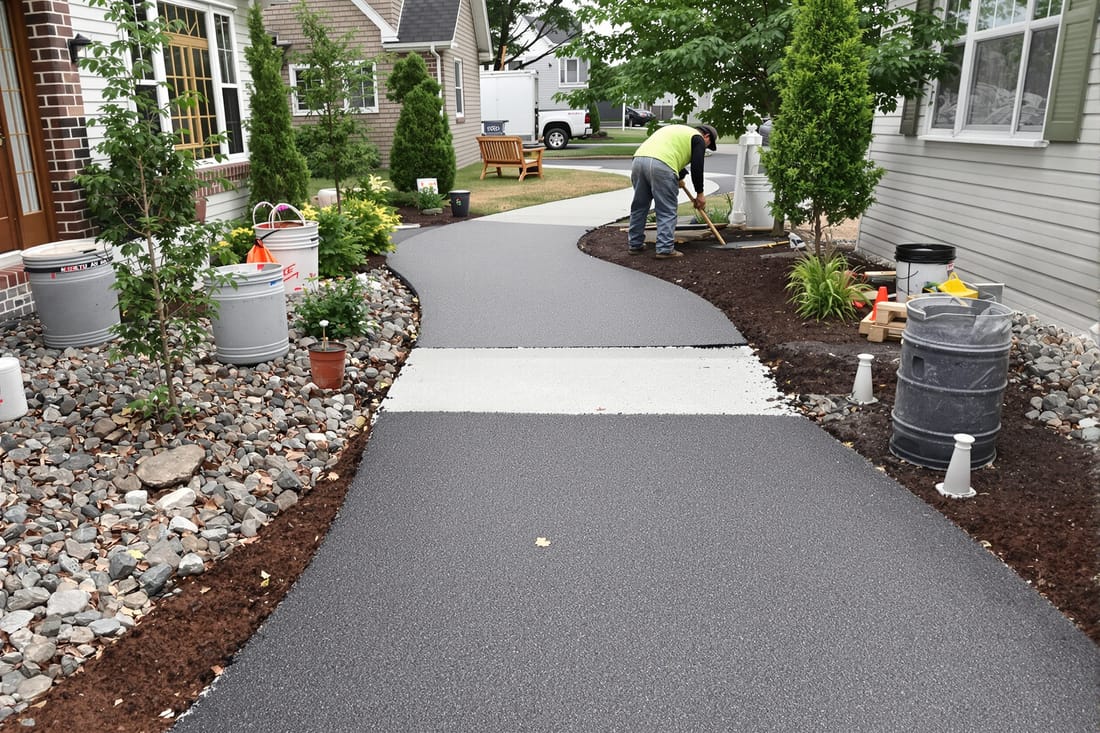
If you want a walkway that survives Boston winters, you need more than a thin strip of blacktop. At Precision Asphalt Boston, we build asphalt walkways and pathways that handle daily foot traffic, strollers, carts, and light service equipment without breaking apart after a few seasons.
We start by asking how the path will actually be used. A straight access walkway from driveway to front door is different from a curving park pathway that needs to shed water over a long distance. We size the width, thickness, and base design around real use, not a one-size-fits-all template. For example, a 3 foot path for light foot traffic may get a different build than a 5 or 6 foot shared-use path near a condo entry where delivery carts and landscaping equipment are common.
Our team works all over Boston, from tight South End townhome yards to wider properties in West Roxbury and Dorchester. That matters because access, drainage, and frost movement vary a lot within the city. We plan your asphalt walkway paving around the property you actually have, including narrow gate openings, mature trees, city setback rules, and existing steps or stoops.
How We Build a Long-Lasting Asphalt Walkway or Pathway
A walkway is only as good as what is under it. With asphalt walkway paving, we put most of our effort into base prep and drainage since that is where most failures start.
1. Layout and grades: We mark the exact alignment, width, and slope with strings, spray paint, and levels. In Boston, we pay close attention to where meltwater will go in March and April. We try to aim water toward existing drains, lawn, or permeable areas, and away from foundations, basement windows, and steps.
2. Excavation: Typical walkways are excavated 6 to 10 inches below finished grade, depending on soil conditions and use. In parts of Boston with heavy clay or old fill, we may excavate deeper to get to solid, undisturbed material. We remove grass, roots, organics, and any loose rubble so the base does not settle later.
3. Base stone installation: We install a compacted gravel base, usually 4 to 8 inches of crushed stone (often 3/4 inch minus). The stone is spread, graded to our design slope, then compacted in thin lifts with a plate compactor. On longer pathways, we compact several times to avoid dips forming later.
4. Edge control: For walkways that meet planting beds or lawn, we can leave a clean compacted edge, install a metal or plastic edge restraint, or tie the path into existing masonry. For paths next to driveways or streets, we sometimes cut a straight joint into the existing pavement so the asphalt locks in tightly.
5. Asphalt layer: For standard residential walkways, we typically install 2 to 2.5 inches of hot mix asphalt after compaction. For high use paths or those that will see carts, snowblowers, or maintenance vehicles, we may recommend 3 inches over a stronger base. The mix is spread by rake or lute, then compacted quickly while hot with a roller and plate compactor along the edges.
6. Joints and transitions: Where the walkway meets steps, existing patios, or city sidewalks, we match elevations carefully to avoid trip edges. If there is an unavoidable change in height, we taper it gradually. This is especially important in older Boston neighborhoods where existing concrete or stone is already set in place and cannot be moved.
Once paved, we recommend keeping heavy objects, dumpsters, or construction materials off the new path for several days so the asphalt can cool and harden fully.
Design Choices for Residential and Commercial Walkways
Asphalt walkway paving is more flexible than many people realize. You can keep it simple and functional, or dress it up so it fits with the rest of your property.
For residential properties, common design choices include:
• Width: Front walkways are often 3 to 4 feet wide so two people can walk side by side. Side yard access paths can be 2.5 to 3 feet if space is tight. Paths intended for trash barrels, snowblowers, or bikes usually benefit from 4 feet or more.
• Alignment: Straight, direct lines work well for front entries or between doors and driveways. Curved paths are useful around trees, gardens, and utilities, and can soften the look of a long run along a fence.
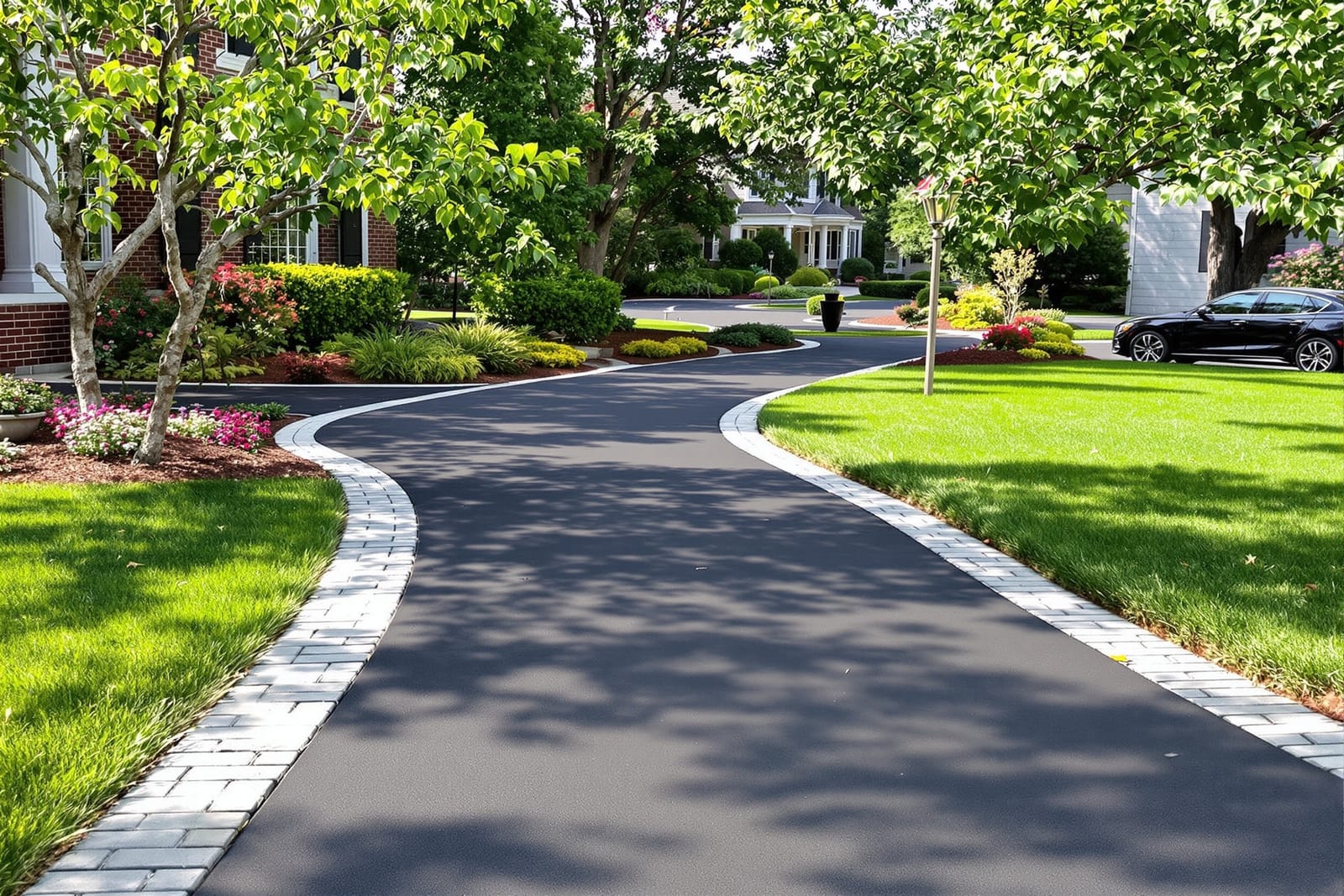
• Edge treatments: To create a finished look, we can pair asphalt with brick or paver borders, concrete mow strips, or steel edging. This is common in Boston brownstone front yards where owners want black asphalt walking surfaces but a more historic or decorative edge.
Commercial and multifamily properties often focus on function and safety. We plan for:
• Consistent width and clear sightlines for tenants and visitors.
• ADA-friendly slopes where feasible, especially near entries and parking.
• Wider turning areas at building corners, trash enclosures, and loading doors.
Lighting, signage, and snow storage locations are also considered. A pathway in the Back Bay that collects snow from plows needs different detailing than a sheltered entry path in a courtyard in Cambridge Street area. We work with property managers and owners to choose the layout that actually fits how people move through the space.
What Drives the Cost of Asphalt Walkway Paving
Walkway and pathway jobs are usually smaller than driveways, which means inefficient planning can push costs up. At Precision Asphalt Boston we explain pricing in plain terms so you know what you are paying for.
The main factors are:
• Total square footage: Narrow but long paths can cost more per square foot than a compact area because equipment movement and handwork time increase.
• Excavation depth and soil conditions: Shallow excavation on stable sandy soil is cheaper than deep digging through clay, rubble, or buried brick that we see in many older Boston yards. If we hit old concrete or unexpected rubble, removing and hauling it off adds to cost.
• Access: If we can bring small equipment reasonably close, labor is lower. If the only access is a narrow alley, basement bulkhead, or through a tight gate, more work must be done by hand with wheelbarrows.
• Base thickness and asphalt thickness: Walkways that will only see light foot traffic can be built lighter than shared-use paths that take carts, hand trucks, and snowblowers. Increased thickness means more stone and asphalt material plus extra compaction passes.
• Removal and disposal: If there is an existing sidewalk, brick path, or broken concrete, we factor in demolition, loading, dump fees, and responsible disposal. In Boston we also work around utility lines and tree roots, which may slow removal.
We give written proposals that separate excavation and base from asphalt paving where it makes sense. That way, if we open the ground and discover poor soil that really needs more stone to perform, you understand the change and why it matters for longevity.
Common Walkway Problems in Boston and How We Prevent Them
Boston’s mix of freeze-thaw cycles, tight spaces, and older construction creates predictable problems for walkways. We plan your asphalt walkway paving to minimize these issues rather than waiting for them to show up a year later.
Heaving and settling: Frost moves weak or poorly drained soil. If the base is too thin or built on soft organic material, the path will heave in winter and settle into waves later. We fix this by removing organics, compacting in layers, and using a base thickness that is appropriate for the specific soil on your property.
Standing water and ice: A dead-level walkway may look neat in summer but becomes an ice sheet in January. We build slight, controlled slopes, often 1 to 2 percent, so water moves off the surface. In small city yards with nowhere obvious for water to go, we sometimes combine grading with shallow swales in adjacent lawn or install small drains tied to existing systems if available.
Tree root damage: Many Boston neighborhoods have mature street and yard trees with shallow roots. If we build too close or too shallow over the root zone, bumps will form in a few years. We evaluate the tree location, discuss compromises on alignment or elevation, and may adjust the base and asphalt thickness to bridge over smaller roots rather than cutting them aggressively.
Edge breakdown: The edges of a narrow walkway are the most vulnerable, especially where lawn mowers or plows ride up. We combat this with proper compaction at the edges and, if needed, edging or a small shoulder of crushed stone or loam that supports the asphalt edge so it does not crumble.
What To Expect When You Hire Precision Asphalt Boston
We work to keep walkway and pathway projects simple and predictable for Boston property owners.
Site visit and planning: A crew leader meets you on site, measures, checks slopes and drainage, notes utilities and tight access points, and listens to how you and others will use the path. We discuss options on width, alignment, and edge details, then send a clear written estimate.
Scheduling and prep: Once approved, we schedule you into a paving window that fits weather and your needs. In Boston we try to avoid paving walkways in cold snaps, especially for shaded north-facing paths. If any permits or coordination with the city sidewalk are needed, we let you know upfront.
Construction: On the first day, we focus on excavation and base. Many residential walkways can be fully prepped in one day. On the paving day, we bring hot mix asphalt from a nearby plant, install and compact it in one continuous operation, and clean up the site before leaving.
Aftercare: You can walk on the new asphalt once it cools, usually the same day, but we suggest waiting 24 hours before dragging heavy objects across it. Snow shovels and plastic blade snowblowers are fine. For metal blade plows and heavy equipment, we can advise based on thickness and use. We also review simple maintenance steps like keeping edges supported and avoiding deep gouges during spring cleanup.
If you are planning asphalt walkway paving anywhere in Boston or nearby Massachusetts communities, Precision Asphalt Boston is available to look at the site, talk through realistic options, and price the work based on what it will take to do it correctly the first time.